
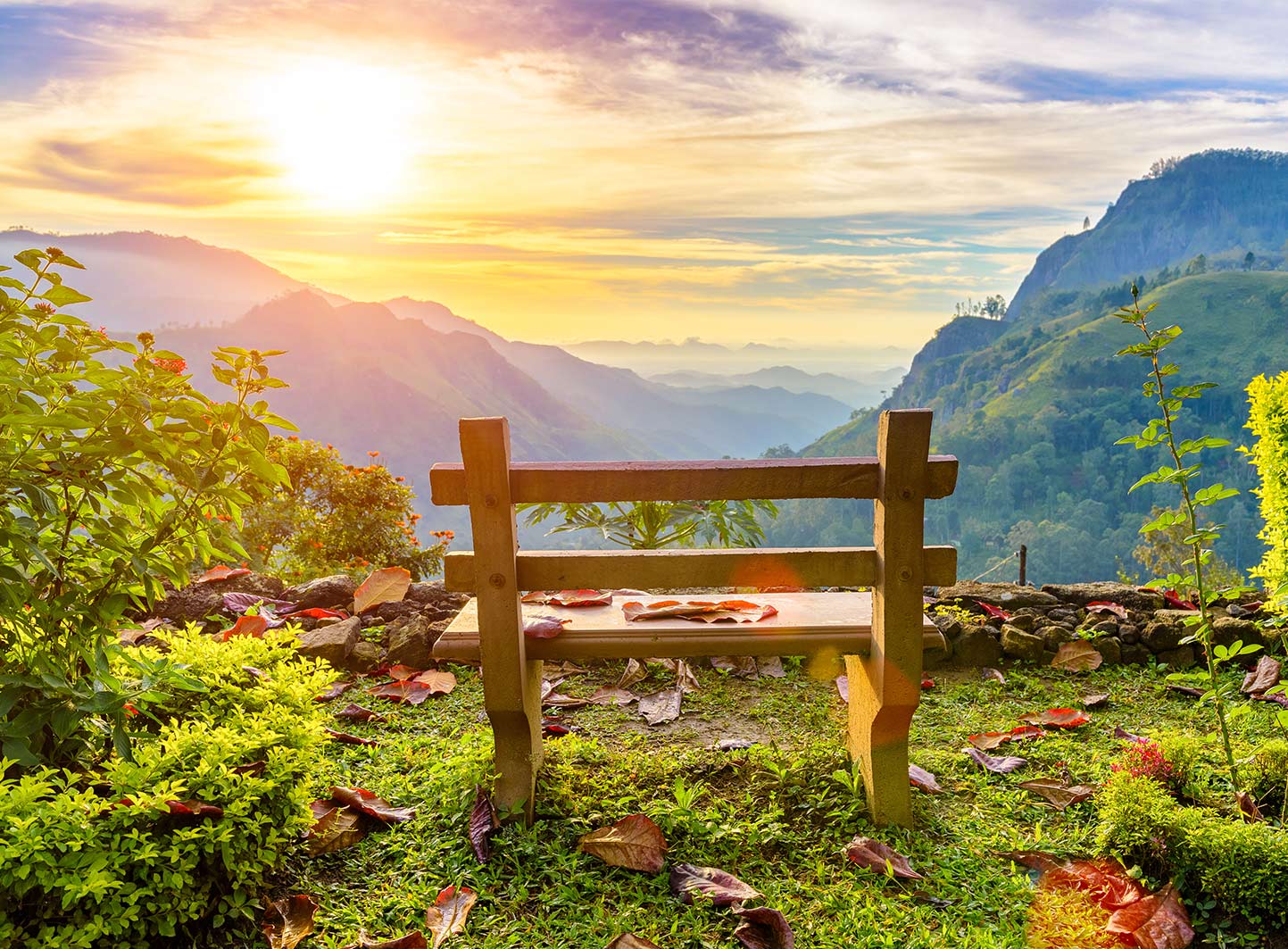
Uva, the hidden paradise
Uva Province, covered with a green carpet, is a perfect escape for a lush lover for its historical significance, cultural and sensitively designed natural location. White cascades, green paradise, mist capped mountain peaks bring us to a heavenly state of mind that is not exceptional for the Uva community. Uva is in plenty of misty peaks, luxurious grown grasslands and green tea estates. The chilly atmosphere adds an extra feeling to the fascinating experience that one can sense here in Uva, especially Badulla, which is exclusively famed for its natural attractions. The chilly climate is the best choice for an exhausted mind to relax. Let me elaborate, how matters stand in Uva.
Uva misty peaks hunt
No wonder why Uva is called ‘The hill country’. Uva being a peaky paradise, stand as a great destination. For anyone to dive in natural marvels, Uva is the best place to tread and affords ideal spots for campers and view hunters. Be lucky to witness the clouds beneath you and the stunning views the mountains afford. They are ready to welcome you, the responsible travellers.
Namunukula
Namunukula being one of the highest peaks in Uva, you can approach in three ways: Passara, Springvally, and Ella, located in the rural countryside. From the foot of the mountain, you are about to step 3km (2036m) to the top, and you will feel like you are passed on to the arms of nature. Make it remind that water is not available for you on the top, and fill your bottles from the springs on the way. You can have the most exquisite beauty from the peak and promise that you never leave anything that belongs to the undisturbed nature you find in Namunukula.
Udaweriya Kanda
Even Namunukula was ranked as the highest mountain in Uva, in reality, Udaweriya being 2060m high, becomes the highest among other highlights. It is not much difficult for you to get there like Namunukula. Take the road from Idalgashinna to Udaweriya, and you will find it as two mountains around a tea state. The hike is about 4km from the foot and is also a perfect place for camping. It stands as a 360֯ viewpoint and a spot that mist often covers.
Madolsima
A mini world’s end, located in a rustic environment surrounded by the state, gives an exquisite view of its geological formation. It is also ideal for camping. If you are to travel by bus, take the Pitamaruwa bus from Badulla, and you can get off at Madolsima, which is heading to mini world’s end (2 km walk ahead). There is a broad scope of surrounding views at the endpoint, and it is not a difficult task to reach there.
Narangala
Narangala, marked as the 6th of Uva from height, is about 1500m high, and it is endowed with fascinating flora pathways which lead you to an eye-catching viewpoint that accompanies you to a blessedness. In the village Keenakale, the mountain Narangala erects, and you can travel there by taking the Keenakale bus from Badulla. The trek spans about 5km, and the clouds might spot below you at a peak; the green carpet mesmerizes you. Even Narangala provides you with an ideal spot for camping, have to carry water with you. The daybreak and the sunset would be loving sceneries you can have here.
Kurulangala
An adventurous walk to archaeological wall arts, Kurulangala in the Ella – Wallawaya road, reach ‘Rakkhitha Kanda Raja Maha Vihara’ from Karandagolla. Afterwards, the walk starts, and it gets 4km to reach the site where a guide is necessary to move onwards. It is a journey to a pre-historic era, wall arts and paintings of various birds, feathers, peacocks and dinosaurs. It is a life – risky journey but would open up another chapter of our buried history.
Uva wildlife
Uva is also a perfect land to reach for wildlife seekers, where you can find several wildlife reserves around. Leopards, bird species, deers, tuskers, elephants are the common and Uva is home to a variety of butterfly species.
Lunugamwehera National Park
National Park ‘Lunugamwehera’ is one of the Uva world forest heritage rich in biodiversity. For those who pursue a love for wildlife, the best fitting is famed for watching elephants, tuskers, deers, and especially aquatic birds take the Tanamalwila – Tissa for about one Kilometre. You will find ‘Thekka Tawana’ (Teak), which is the entrance of the national park Lunugamwehera.
Udawalawa
Udawalawa, one of the significant highlights located in districts of Monaragala and Rathnapura, is popular among travellers who seek an encounter with the world of fauna where elephants, tuskers, wild boars, peacock, and deer are abundant. At the 7th milepost, the entrance to this site stands in the road Udawalawa – Thanamalwila.
Yala National Park
The world’s largest leopard’s density is set to be founding Yala, the second largest national park in Sri Lanka. It is only for the responsible admires of the wildlife. If you wish to witness several beasts and birds in a shorter period, the safari journey in Yala is the best one that makes your expectations come real. Leopards, giant herds of deers, sloth bears, wild boars, elephants and tuskers are often spotted on this site. And it is situated covering a vast area of Southern Province and Uva Province.
Thangamale Sanctuary
Located just next to Adhisham bungalow, it is an ideal site for those who seek bird watching. Many species of birds that are endemic to Sri Lanka have been identified in the sanctuary, Thangamale. It is situated in a visually pleasing lush platform, about 5.3 km from Haputale and ideal for a nature walk. For those who gush over the country’s lush, here is one of the best choices for you, paired with the picturesque sight of Adhisham bungalow.
Ravana legendary spots in Uva
‘Lankapura’ kinged by the extraordinary personality; the legend Ravana in the pre-historic era now is known worldwide in the name of ‘Sri Lanka’. ‘Ramayana’, in which its author “Valmiki” has made the character “Ravana” a villain for his abduction of princess Seetha and hiding her from Rama’s eyes. The reign of king Ravana is said to be the golden era of Sri Lanka for his extended power, advanced technology and optimum usage of natural resources sustainably. Despite Ravana’s underground palaces upheld by the local lore, the beliefs of the underground tunnel system are now getting true with the time to time discoveries by the community.
Sthripura cave
The legend Rama-Seetha speaks out Sthripura cave is also as one of those places that Ravana cached Seetha. To reach this spot, drive from Welimada to Kirawanagama, and the trek starts from the temple, which spans about 2 km. It seems to be a risky journey through the tunnel, and it is believed that the tunnel from Ravana cave has been linked together.
Ravana cave
Located in a green backdrop 2 km away from Ella (Ella-Wellawaya Road), beside Ravana Raja Maha Viharaya, Ravana cave is where Seetha had been camouflaged as a spot to what Walmiki says in his Ramayana. This place is mostly visited by Indian tourists. The cave stands nearby springs, and it is much spacious inside. Ravana cave is an entrance to a tunnel believed to be ended in a pond of blue water (‘Bluewater Pond’ in Karandagolla). Moreover, word of mouth from earlier times says the tunnel from Dova Raja Maha Vihara links with the tunnel from Ravana cave.
Seetha Amman Kovil
Situated 1km away from Haggala Botanical Garden, on the road Welimada- Nuwara Eliya, Seetha Amman Kovil is around ‘Ashoka Wanaya’ where the king Ravana hid ‘Devi Seetha’. It is believed that Hanuman (according to Ramayana), who arrived in Sri Lanka in search of Seetha, had left a footprint on a rock.
Seetha Kotuwa
Found in a forest in the village of Gurulupotha, approximately 5km ahead from the town of Hasalaka. It is known as one of the sites steeped in legend Ravana.
Nil Diya Pokuna
‘Nil Diya Pokuna’ is one such discovery that makes the Ravana’s tunnel roadways a reality, sitting about 200m below the ground with the tunnel leading to the pond. The pond has got its name ‘Nil Diya Pokuna’ for the blue colour its water embellishes. On the way to the underground trail, you will realize that you are in the most extensive cave system in Sri Lanka yet discovered. It is believed that the tunnels starting from Ravana cave and Dova Raja Maha Vihara connect with the tunnel leading to this pond. And no clue to find what water sources feed this pond. But still, if you are an expert diver, your eyes are lucky to witness few rooms which stand at the other end of the pond. Nil Diya Pokuna is the first underwater cave system found in Sri Lanka, and several expeditions have been practised here but not to its endpoint.
Culinary walk to Uva
Uva has some unique dishes specifically that one can taste only from Uva. It is meant to keep the Uva food heritage alive.
Kollu
An exclusive dish only visible in Uva, ‘Kollu’ is abundant with nutrients, and it is prepared from the peels of ‘Kollu’, which is similar to the green gram, by grinding them. Uva community go for ‘Kollu’ to couple with ‘Kurakkan Thalapa’, rice or meat.
Finger Millet (‘Kurakkan’)
‘Kurakkan’ is plentiful in Uva province, and under the Uva food heritage, it lifts a great weight. ‘Kurakkan balls’ which is popular as ‘Kurakkan Thalapa’ among Uva residents. They are to swallow accompanied with the Uva’s special Kollu, rich in nutrients.
‘Iringu Bath’
An eye-catching dish prepared from Iringu (Corn) and Kawpi (Cowpea) served along with Sri Lanka’s special “Sambol” or “Kiri hodi” (White curry). Still, the Sri Lankan nutritious local dishes remain, and it is high time to let them survive.
Festive bliss in Uva
Kataragama procession
The island-known cultural marvel, Kataragama procession, is annually lined up by Kataragama Dewalaya, dedicated to God ‘Skandha Kumara’, in the district of Monaragala. This remarkable event is put together in the period of July – August. It consists of various colourful items endemic to Sri Lanka like ‘Kandyan dancing’, ‘Pahatharata dancing’, ‘Kawadi’, ‘Peacock dancing’ etc. Kataragama is a place where diversified people from different religions or faith and different geographical locations gather. Kataragama procession is a quintessential moment that brings out festive bliss in Uva.
Ankeliya in Ampitiya dewala
Ankeliya is one of the cultural items practised festively in specific paths of Sri Lanka, dedicated to goddess ‘Patthini’, who is believed to be the spring of success. In Ampitiya dewala, ‘Ankeliya’ is held in high spirit, is an effort to pass the authentic ritual knowledge to the next generation inherent to the devotees of the goddess ‘Patthini’. Earlier it was said to be set up each year, but at present, once five years, this special ritual can be seen in ‘Ampitiya’. (Last held in 2017 and upcoming ceremony will be 2022). Ankeliya is an intangible attraction based on distinctive traditions and cultural background, even though it has not gotten much attention.
Despite the soothing environment Uva affords, it is also famed for freedom fights in the Colonial Periods. According to Dave’s reports(1967), the’ Indalgashinna gap’ had been the entrance to the province, Uva, in the colonial period. The Sinhala fighters had also used the entrance to move to the’ Upper Uva’. The ancient royal street of ‘Sabaragamuwa’ to’ Uva’ stands in the western part of this mountain. And, the first remarkable riot against the British was taken over by the local freedom fighters; in 1818 Uva uprising had also raised and headed in Uva, which ended up making the Uva a “Killing field” by governor Robert Brownrigg. Staring at the devastation made by the British in Uva, Brownrigg has noted that Uva would not rise for 200 years. But, Uva having a soothing environment with a healing climate and green scenery, today Uva is one of the best areas to breathe, stay and enjoy. Now, a word of caution! If you are a walking destructor, this wording is not for you.